



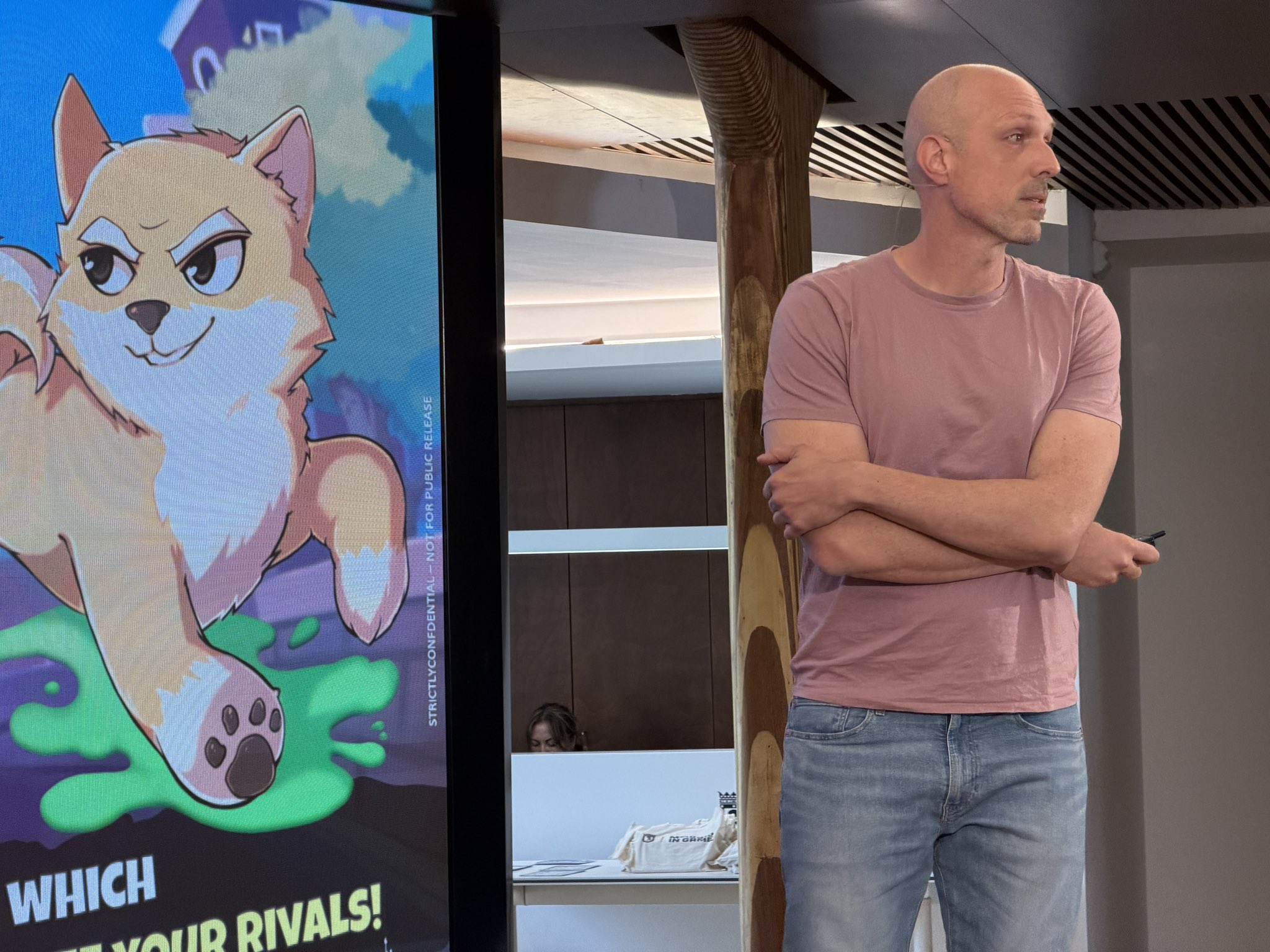
Jesús Luengo Interview
Who is Jesús Luengo?
Well, I’m the founder of Artax Games. But I’m also many other things. I studied the Video Game Master’s program at UCM, I’ve worked as a programmer and as a lead game designer at several companies, and about 10 years ago I decided to start my own studio, Artax Games.
What is your role at Artax Games? And at DOBA?
At Artax, I do a bit of everything. Besides being in charge of the coffee, I’ve led many of our projects as a design lead and producer. Fortunately, I now have an amazing team, with people like Valli and Lucía who help me with these tasks, so I’m focusing more on business development, which has to be one of my main responsibilities.
At DOBA… it’s been a bit of everything. DOBA is a project we’ve been working on for many years. Initially, I was a game designer, level designer, producer… this went on for a couple of years, and that’s how we launched Splat Dogs, which was the seed of what DOBA is today, in a mobile version that already had online multiplayer, though with many differences from the current DOBA.
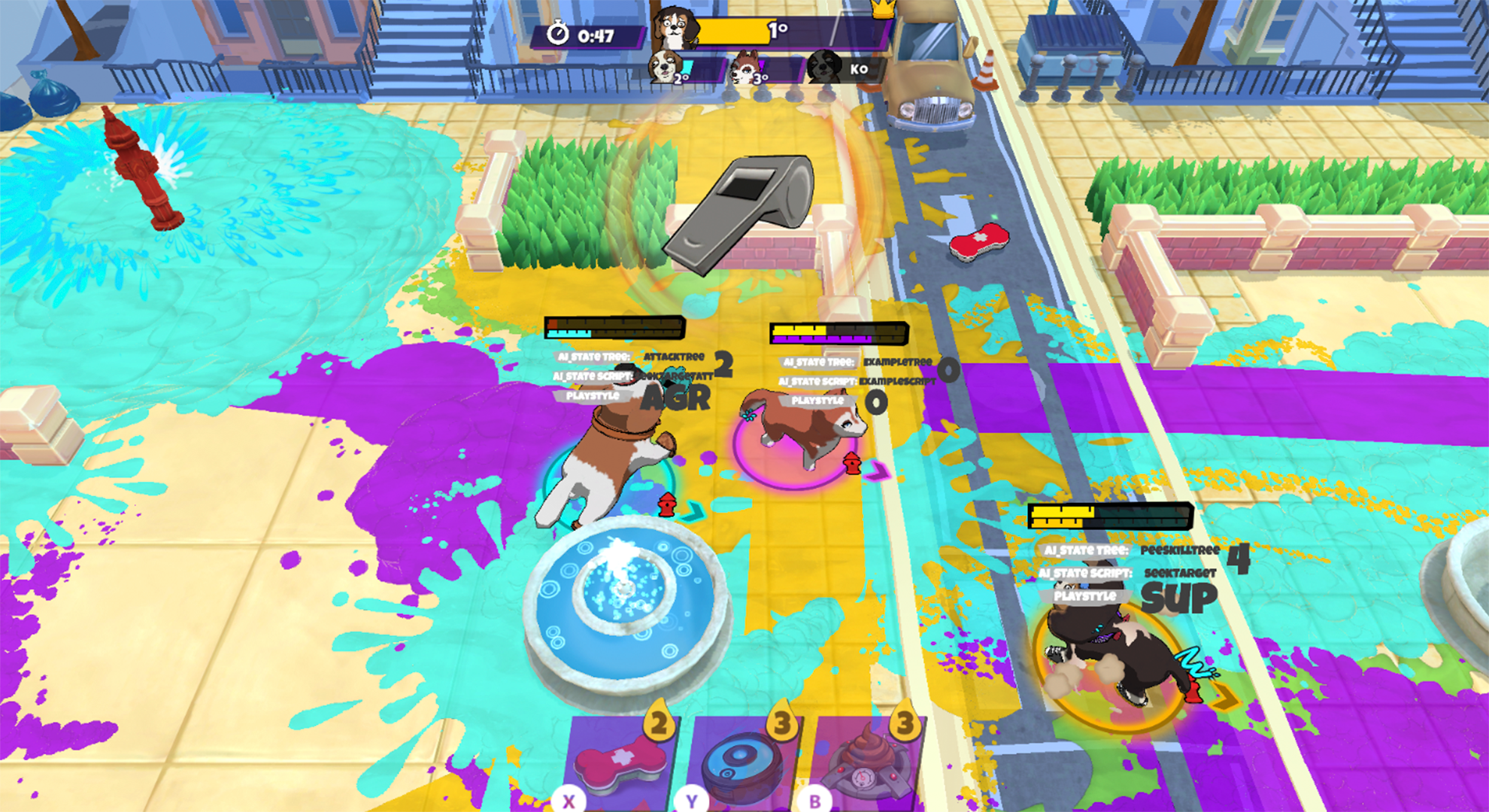
You mentioned Splat Dogs as the seed of today’s DOBA. Can you tell us more?
There’s a lot to tell! Especially if you like game design and are interested in the adventure of developing games. Splat Dogs came out of a Game Jam. For many years, I’ve been a professor in several video game master’s programs and degrees: Universidad Complutense, Universidad Politécnica de Madrid, Las Palmas de Gran Canaria… at the Politécnica, they organized a Game Jam once a year.
A former student of mine, Antonio Clavaín, who at the time worked at Artax, developed a very simple game for the jam called “Yes, pipicán!” (It was the Obama era, “Yes we can”, so the name was already a funny pun). The mini-game included the core mechanic of DOBA, inspired by Splatoon: the dogs would drink from fountains to recharge their pee and then paint with colored pee. It was very fun for a jam. In fact, I was part of the jury, and it won first prize.
It’s true that the game didn’t have much longevity—it lacked depth and didn’t allow much beyond a few rounds. But the mechanic was fun, a simplified Splatoon, and I fell in love with it. From there, I started considering evolving it. We introduced the idea of giving the dogs MOBA-style abilities to turn it into an arena brawler, and that led to Splat Dogs.
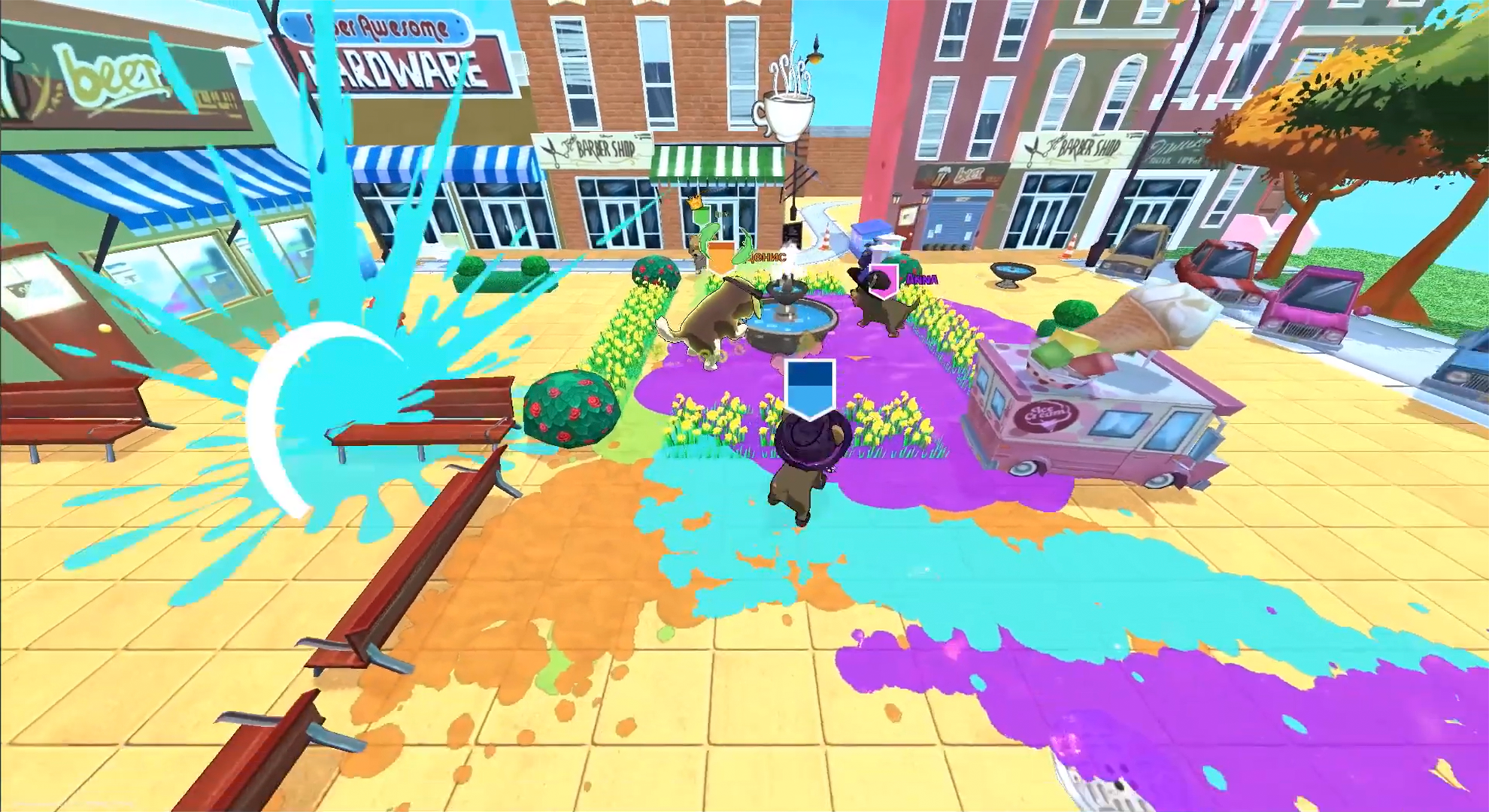
And how did it perform? Would you say it was a success?
No, it can’t really be called a success. There were some good things. For example, we had a Day-1 retention above 70%, which, for those familiar with mobile games, is an incredible figure. This was because the game had a lot of quality for a mobile game, offered online play, and inclided a wide variety of features. And the short-term mechanics were very fun. But it then dropped sharply by Day 7 because it lacked depth and wasn’t engaging enough to keep players coming back.
We also made some mistakes. Trying to square the circle, we added a dog-care layer like Nintendogs or Tamagotchi. You could feed the dogs, give them water, bath them, throw the ball, pet them… there were tons of activities, and each dog had over 120 animations. We thought the emotional involvement with the dogs would make players return daily, while the competitive arena and progression would retain them long-term. I remember discussing it at a developer event in Belgrade with other game designers—I’m not sure if it was Casual Connect—and they thought it was a great idea. The naked truth? Both elements appealed to different types of players. Players who wanted a cozy game to take care of dogs didn’t want other dogs “hurting” their pets in the competitive arena. And those who wanted to fight in arenas had no interest in brushing their dogs every day.
However, many people still remember the game fondly. We even have fans who sometimes ask if it will return. When we announced DOBA, we received some messages of joy and support that were truly touching. They mean there are people who remember your game, for whom your game was an important part of their lives. That’s beautiful, and we’re happy to bring some of that back with DOBA, which is far better than Splat Dogs ever was.
So is that why Splat Dogs ended?
That’s part of it. We would have continued iterating, adjusting, and learning. But we had other projects to focus on and, more importantly, Splat Dogs’ online system relied on GameSparks, a backend service with online server support that Amazon bought… to shut it down. They gave notice, but at that time it was impossible for us to migrate to another system, so the project had to be frozen.
That said, we learned a lot. Personally, I learned so much analyzing every detail of why the game wasn’t working. I left a new version of the GDD written with all the changes needed to make the game truly fun and addictive. It stayed on the shelf for another two or three years. I was firmly convinced that those changes would be a turning point and could make the game amazing. But we had to wait three years to put it into motion, and by then, I no longer had the time to lead it. We were already developing Bluey and had started our role as publishers for other indie studios, so I simply didn’t have the time. That’s when Valli took over, initially as game designer and producer, though later Lucía assumed the producer role.
How was it to hand over a project that was “your baby” to someone else?
Well, I never really left. I’ve always stayed in the background, sometimes offering a very specific vision for certain elements. But Valli did an excellent job. He took the design I left and made it his own, with absolute respect. He also grew it and added his vision. Many things in DOBA no longer come from me or that document, but from him.
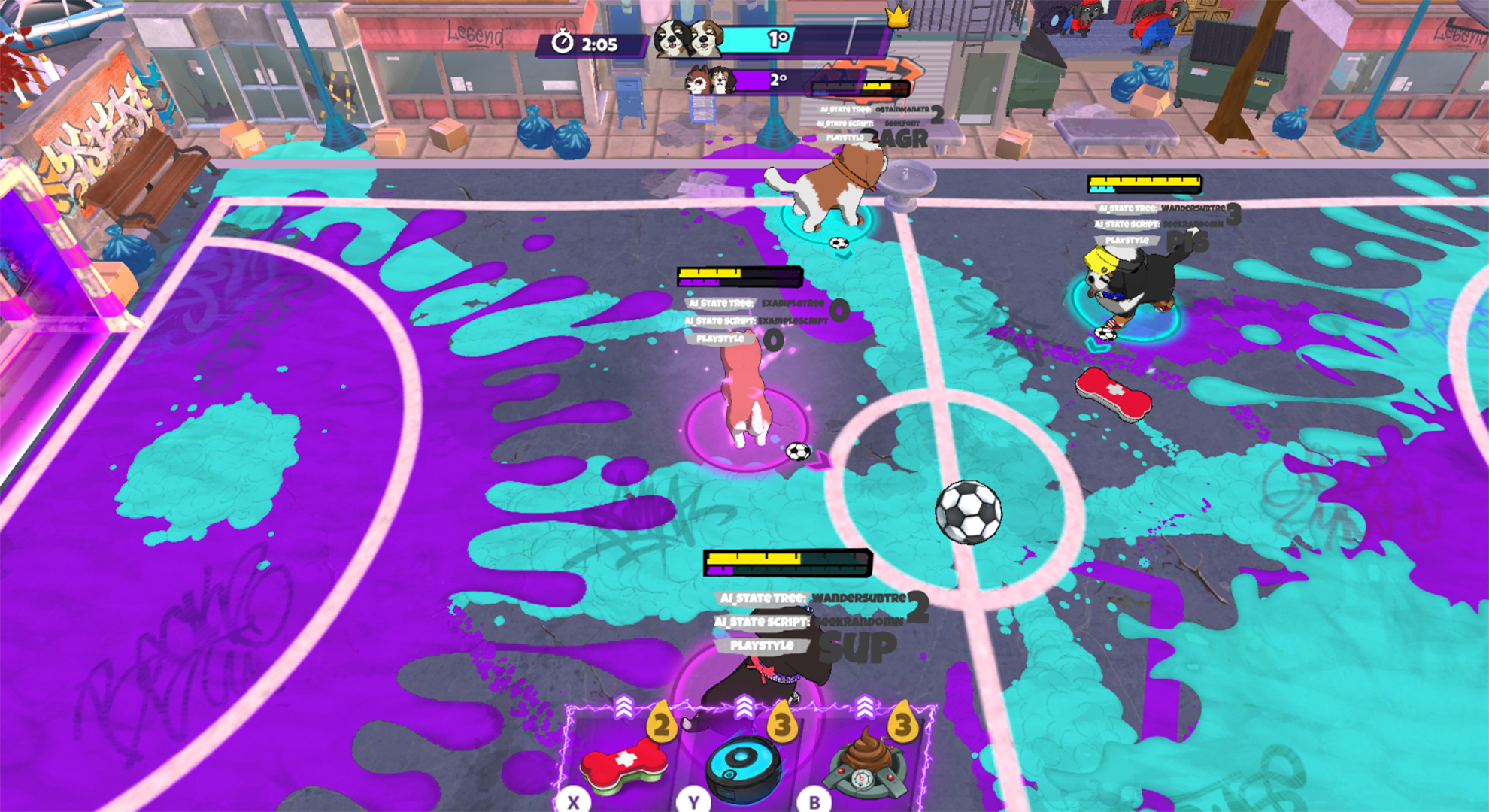
I always say that Valli, to a certain extent, “hardcored” the game. He’s a much more hardcore player than I am, battle-tested in many arenas. And it shows in DOBA. He managed to combine my vision with his own. We didn’t lose the freshness or party vibe, and any midcore or casual-midcore player can start playing, focusing just on drinking water and peeing. But when you dig deeper, you discover dogs with different playstyles, complementary and well-balanced. And a skill system with enormous depth, allowing combos and strategies we hadn’t even envisioned. Combined with the new mechanics specific to each arena—Domination, Football, Survival, and Pursuit—we ended up with a game that is absolutely insane.
When did you realize you had succeeded?
It wasn’t easy. For months, Valli, Rayo, and Lucía worked almost alone, improving systems and adding content, because we were busy with other things. I tested occasionally and felt it wasn’t working yet. I don’t think I’m smarter than anyone else, but after many years in this, I can tell when something works. DOBA took time to work—it wasn’t broken, we were just doing many things at once, balancing them and making them work together, which is complex. We had to give the team time.
Then one day, the magic happened. It’s something that happens with many games. There’s a turning point when you can see what the game will be and whether it has potential. And the change with DOBA was huge. When all the features started working together, suddenly we had a vibrant, fun, cheeky, and addictive game. I guess it’s a bit boastful to say, but the matches are hilarious—not just because of the party brawler vibe, but because there’s depth, strategies, and variety. The whole team is proud of what we’ve done and can’t wait for everyone to try it.
Finally, do you have a funny anecdote about DOBA you can share?
Well, we have an inside joke that at Artax, we only make dog games. We made Bluey, we made DOBA… and we’re preparing another game, very different, also starring a dog. I don’t know if it counts as an anecdote, but it’s the one that comes to mind.


